
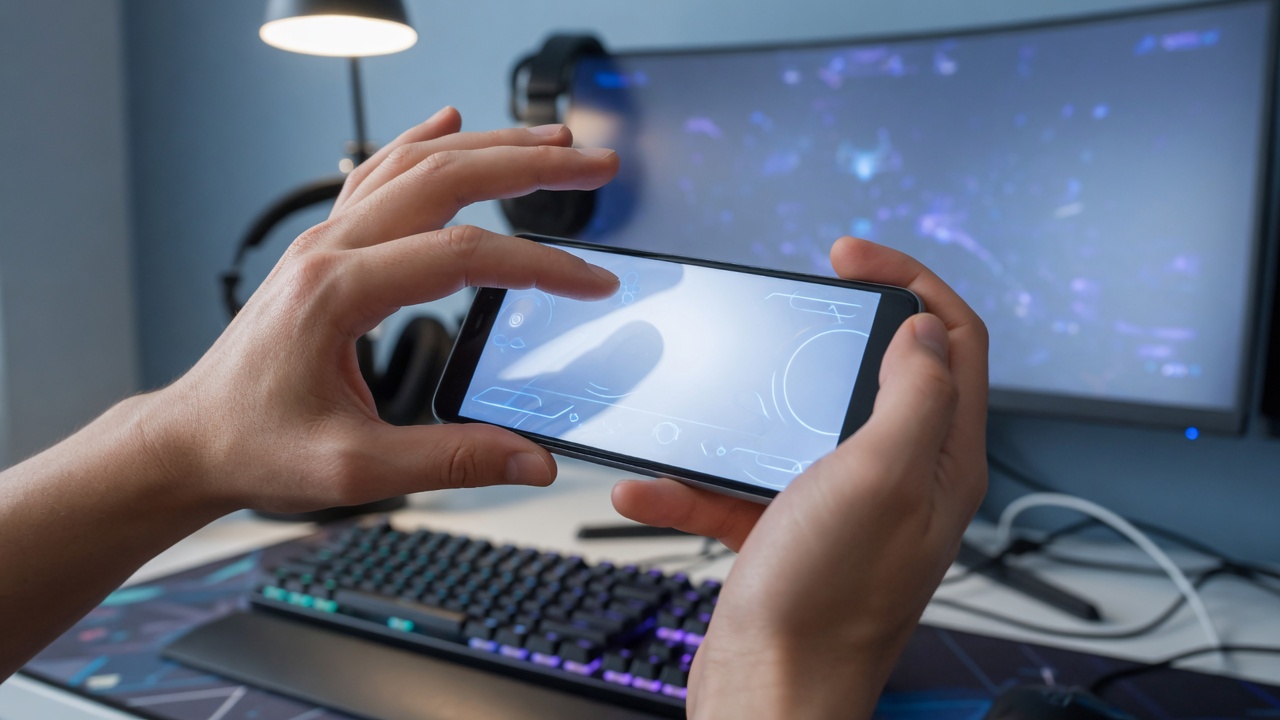
Introduction to Gesture-Based Controls in Mobile Gaming
Gesture controls have revolutionized the way players interact with mobile games, offering an intuitive and immersive touch interaction experience. Unlike traditional button-based controls, gesture-based inputs leverage natural finger movements such as swiping, pinching, tapping, and dragging, creating a more fluid and dynamic gameplay environment.
As mobile gaming continues to grow rapidly in popularity, the importance of gesture controls in enhancing gameplay cannot be overstated. Developers seek to break free from the limitations of physical buttons and virtual joysticks by incorporating gesture recognition technology, which allows players to perform complex actions effortlessly. This shift not only improves player engagement but also broadens the accessibility of games to a wider audience, including those who may find conventional controls challenging.
The integration of gesture controls aligns perfectly with the tactile nature of smartphones and tablets, where touch interaction is the primary mode of communication between users and devices. By embracing this approach, mobile games offer a richer, more responsive experience that can better mimic real-world motions, increasing the sense of immersion and realism during gameplay. From simple taps that confirm actions to intricate multi-finger gestures used in advanced maneuvers, gesture-based controls redefine the boundaries of mobile gaming interaction.
Moreover, the evolution of gesture controls continues to enhance mobile gameplay by enabling innovative game mechanics and smoother control schemes. This ongoing development encourages creativity among both developers and players, fostering new ways to enjoy mobile games that feel organic and engaging. As gesture controls become more refined and widespread, they are set to become a fundamental pillar in delivering next-generation mobile gaming experiences centered around natural touch interaction and seamless gameplay enhancement.
What Are Gesture-Based Controls?
Gesture controls are intuitive touch gestures that allow users to interact with mobile interfaces in natural and efficient ways. These controls have become an essential part of mobile gameplay because they enable players to perform actions without relying on traditional buttons or joysticks. Common touch gestures include tapping, swiping, pinching, and dragging, each of which serves different purposes in gameplay mechanics.
Tapping is the simplest gesture, where a player quickly touches the screen to select objects, trigger actions, or shoot in shooting games. Swiping involves moving a finger across the screen in a specific direction, often used for navigation, dodging obstacles, or executing special moves. Pinching uses two fingers moving closer together or farther apart to zoom in and out on the game environment, giving players better control over their view of the action. Dragging, on the other hand, lets players move objects or characters by holding and sliding their fingers across the screen.
These touch gestures create a seamless interaction with mobile interfaces, making gameplay more engaging and responsive. By integrating gesture controls, mobile game developers tap into the natural movements of players’ hands, enhancing the overall experience while keeping the controls simple and accessible. This adaptability is why gesture-based controls continue to grow in popularity across various mobile gaming genres.
Why Gesture Controls Are Popular in Mobile Gaming
Gesture controls have rapidly gained popularity in mobile gaming due to their intuitive and user-friendly nature. Unlike traditional button-based inputs, gestures offer a seamless and natural way to interact with games, enhancing the overall user experience. This ease of use allows players of all skill levels to pick up and enjoy mobile games without a steep learning curve.
One of the main factors contributing to the gesture popularity is how these controls integrate fluidly with the mobile game interface. By utilizing swipes, taps, pinches, and other touch-based motions, games create an immersive interaction that feels engaging and dynamic. This direct interaction fosters a deeper connection between the player and the game world, increasing player satisfaction and time spent in-game.
Furthermore, gesture controls free up the screen from cluttered buttons, allowing for a cleaner and more visually appealing game interface. This minimalist design enhances the aesthetic appeal and makes gameplay more enjoyable by focusing attention on game content rather than on control elements. As a result, developers are increasingly adopting gesture-based mechanics to create innovative mobile gaming experiences that stand out in a crowded market.
In summary, the popularity of gesture controls in mobile gaming stems from their ease of use, immersive interaction, and the ability to create a streamlined mobile game interface. These factors combine to elevate the player experience, making gesture-based controls a preferred choice for both developers and gamers alike.
Benefits of Gesture-Based Controls for Enhancing Mobile Gameplay
Gesture-based controls have revolutionized the way players interact with mobile games, offering numerous gameplay benefits that traditional touch controls often cannot match. One of the primary gesture advantages is the intuitive and natural interaction they provide. Players can use simple swipes, taps, pinches, and shakes, which mimic physical movements, making gameplay feel more immersive and engaging.
These controls help streamline user engagement by reducing the learning curve, allowing even casual gamers to quickly understand and enjoy mobile games without complicated button layouts. This ease of use boosts player satisfaction and session lengths, resulting in a more dynamic and responsive gaming experience. By responding directly to physical gestures, mobile controls enhance the tactile feedback that players receive, making gameplay feel tactile and alive.
Moreover, gesture-based controls enable developers to create more innovative and diverse game mechanics. For example, instead of simply pressing a button to jump or attack, players can perform more nuanced actions like drawing shapes or performing multi-touch gestures to execute special moves. This level of interaction not only enriches the gameplay experience but also encourages creativity both in game design and player strategy.
Another significant benefit is the accessibility aspect. Gesture-based controls make mobile games more inclusive, catering to players who may have difficulty with traditional small buttons or complex control schemes. This inclusivity broadens the audience and ensures that more users can enjoy mobile gaming regardless of physical constraints or disabilities.
Finally, the integration of gesture-based controls offers a competitive edge by increasing game responsiveness and precision. Players appreciate the fluidity and control they gain from gestures, which can translate into improved performance and a more satisfying gameplay experience. This refinement in control sensitivity can elevate mobile gaming to new heights, fostering deeper player commitment and loyalty.
Improved Player Immersion and Interaction
Gesture-based controls significantly enhance player immersion by creating a more intuitive and engaging gaming experience. Unlike traditional button presses, gestures mimic real-life motions, allowing players to physically interact with games in a natural way. This form of player interaction bridges the gap between the virtual and physical worlds, making gameplay feel less like operating a device and more like participating in an interactive environment.
With gesture input, actions such as swiping, tapping, pinching, and tilting become extensions of the player’s intentions, reducing the cognitive load needed to translate commands into game mechanics. This seamless integration helps players maintain focus and emotional involvement, boosting overall immersion. As players use their bodies to control characters or manipulate objects, the gameplay experience becomes more dynamic and responsive, drawing them deeper into the narrative and challenges presented.
Furthermore, the natural interaction enabled by gesture-based controls fosters a stronger connection between the player and the game environment. This connection is essential for enhancing enjoyment and satisfaction, as players feel more in control and competent when their movements are directly reflected on screen. Ultimately, gesture input not only improves gameplay fluidity but also elevates the emotional and sensory engagement that defines immersive mobile gaming.
Enhanced Precision and Responsiveness
Modern gesture-based controls are revolutionizing mobile gameplay by offering unparalleled gesture precision and highly responsive controls. These advancements allow players to interact with their games in a way that feels natural and intuitive, translating subtle finger movements into accurate in-game actions. This increased precision ensures that every swipe, tap, or pinch is recognized quickly and correctly, reducing input lag and minimizing errors that can disrupt the gaming experience.
The responsive controls enabled by contemporary touchscreens and advanced software algorithms make gameplay smoother and more engaging. Real-time feedback from gesture inputs means that players can perform complex maneuvers with ease, enhancing their control over characters or game elements. This responsiveness is particularly critical in fast-paced games where split-second decisions and actions can determine success or failure, making the technology essential for competitive and immersive mobile gaming.
By combining gesture precision with rapid, responsive controls, mobile games now offer a level of performance that rivals traditional console or PC gaming. Developers are leveraging these capabilities to design gameplay mechanics that harness the full potential of touchscreen interfaces, resulting in a more dynamic and enjoyable player experience. Ultimately, the integration of precise gesture-based inputs and responsive controls significantly elevates the overall quality and competitiveness of mobile gameplay.
Accessibility and Customization Options
One of the most significant advantages of gesture-based controls in mobile gaming lies in their remarkable ability to accommodate players of all abilities. Accessibility has become a cornerstone of modern game development, and touch-based interfaces offer unprecedented opportunities for creating inclusive gaming experiences that everyone can enjoy.
Modern mobile games increasingly feature comprehensive game settings that allow players to tailor gesture inputs to their specific needs. Whether someone has limited mobility in certain fingers, prefers larger touch targets, or requires simplified control schemes, developers now provide extensive options to modify how gestures are recognized and executed. This flexibility ensures that gaming remains an activity open to diverse audiences.
Custom controls represent a game-changing feature for many players. The ability to remap gestures, adjust sensitivity levels, and create personalized control layouts means that individuals can configure their gameplay experience around their unique requirements. Some games even allow players to record their own gesture patterns, creating truly bespoke control systems that feel natural and intuitive.
Beyond physical accessibility, gesture customization also benefits players who simply prefer alternative control methods. Left-handed players, those with different hand sizes, or gamers who favor specific finger combinations can all optimize their experience. The result is a more comfortable, enjoyable gaming session that reduces fatigue and increases engagement.
As the industry continues prioritizing inclusive design, gesture-based controls will undoubtedly evolve further, offering even more sophisticated accessibility features that welcome every player into the mobile gaming community.
Future Trends and Innovations in Gesture-Based Mobile Gaming
As mobile gaming technology continues to evolve, the future of gesture-based controls holds immense promise. Future trends in this space are focused not only on enhancing the user experience but also on integrating more intuitive, immersive, and responsive gesture innovations. These advancements are set to redefine how players interact with mobile games, making gameplay more natural and engaging than ever before.
One significant trend is the incorporation of advanced sensors and machine learning algorithms to better recognize and predict a player’s intended gestures. This will allow for more accurate and seamless interaction, reducing latency and minimizing errors during gameplay. Enhanced gesture recognition will enable complex motions, such as multi-finger swipes, pinches, and rotations, to be interpreted with greater precision, opening the door to more sophisticated game mechanics.
Another innovation is the integration of augmented reality (AR) and virtual reality (VR) technologies with gesture-based controls. By combining AR/VR with gesture input, developers can create immersive gaming environments where players physically interact with virtual objects using natural hand movements. This fusion will significantly boost the realism and user experience, transforming mobile devices into powerful gaming platforms that bridge the gap between digital and physical worlds.
Furthermore, advancements in haptic feedback technology will complement gesture controls by providing tactile responses to players’ movements. This will enhance the sensory experience, making mobile gaming more immersive by delivering physical sensations like vibrations or pressure corresponding to in-game actions. The synergy of precise gesture controls and responsive haptics will elevate the overall user experience, making gameplay feel more visceral and satisfying.
Personalization is also a key future trend, with mobile gaming technology increasingly leveraging artificial intelligence to adapt gesture controls to individual player styles and preferences. This customization will improve accessibility, ensuring that users of varying skill levels and abilities can enjoy a smooth and enjoyable gaming experience. Gesture-based interfaces will become more adaptive and intuitive, responding dynamically to how each player interacts with their device.
Finally, the proliferation of 5G and edge computing will play a crucial role in advancing gesture controls by enabling faster data processing and lower latency. This technological boost allows real-time interpretation of complex gestures, facilitating multiplayer and cloud-based mobile gaming experiences with minimal delay. As a result, future gesture innovations will support more collaborative and competitive games, expanding the scope and social dimension of mobile gaming.
In summary, the future trends in gesture-based mobile gaming technology focus on making controls more intelligent, immersive, and user-centric. With continuous innovations in sensors, AR/VR, haptics, personalization, and network capabilities, the user experience will reach new heights, driving the next wave of mobile gaming evolution.
Advancements in Sensor and AI Technologies
AI gesture recognition and advances in sensor technology are revolutionizing mobile innovation by significantly enhancing gesture detection and control accuracy in mobile games. Modern mobile devices are equipped with highly sensitive multi-dimensional sensors that capture even the subtlest movements, providing precise data to AI algorithms. This fusion of hardware and software allows for accurate interpretation of player gestures, reducing errors and delays that previously hindered the gaming experience.
Artificial intelligence powered gesture recognition systems continually learn from user interactions, improving responsiveness and adapting to individual play styles. This dynamic learning capability, paired with enhanced sensor inputs such as gyroscopes, accelerometers, and depth sensors, delivers a seamless and intuitive control mechanism. Players can now enjoy a more immersive and natural gameplay experience as their movements are accurately mirrored within the game environment.
These technological advancements also enable developers to design more complex and diverse gesture-based controls without compromising accuracy. As sensor technology evolves, combined with AI’s increasing computational power, mobile innovation in gaming is set to reach new heights. This ensures that gesture-based controls become not only a novelty but a reliable and integral part of mobile game interfaces.
Integration with Augmented Reality and VR
Gesture-based controls are rapidly becoming a cornerstone of AR gaming and VR controls on mobile devices, profoundly enhancing user immersion. By integrating natural hand movements and gestures, developers create more intuitive and tactile experiences that transcend traditional touch inputs. This gesture integration allows players to interact with virtual environments in ways that feel fluid and responsive, bridging the gap between the digital and physical worlds.
In AR gaming, gesture controls enable users to manipulate augmented elements seamlessly within their real-world surroundings, adding a layer of realism and engagement that static controls cannot achieve. Whether it’s casting spells with hand motions or navigating menus through swipes and taps mid-air, these gestures deeply embed players into the AR experience. Similarly, VR controls benefit from gesture integration by offering freedom of movement and the ability to perform complex actions without cumbersome controllers, improving comfort and playability.
As mobile hardware evolves—with more accurate motion sensors and cameras—gesture recognition technology continues to improve in precision and responsiveness. This progression facilitates more sophisticated AR and VR game mechanics that heavily rely on gesture-based input. Ultimately, the fusion of gesture controls with AR and VR on mobile platforms is redefining how games engage users, making gameplay more immersive, interactive, and accessible than ever before.

I’ve been exploring casino games and betting strategies since I first tried a slot machine in a local arcade. I love breaking down game mechanics, hunting for the best bonuses, and sharing responsible gaming tips with our community.
