
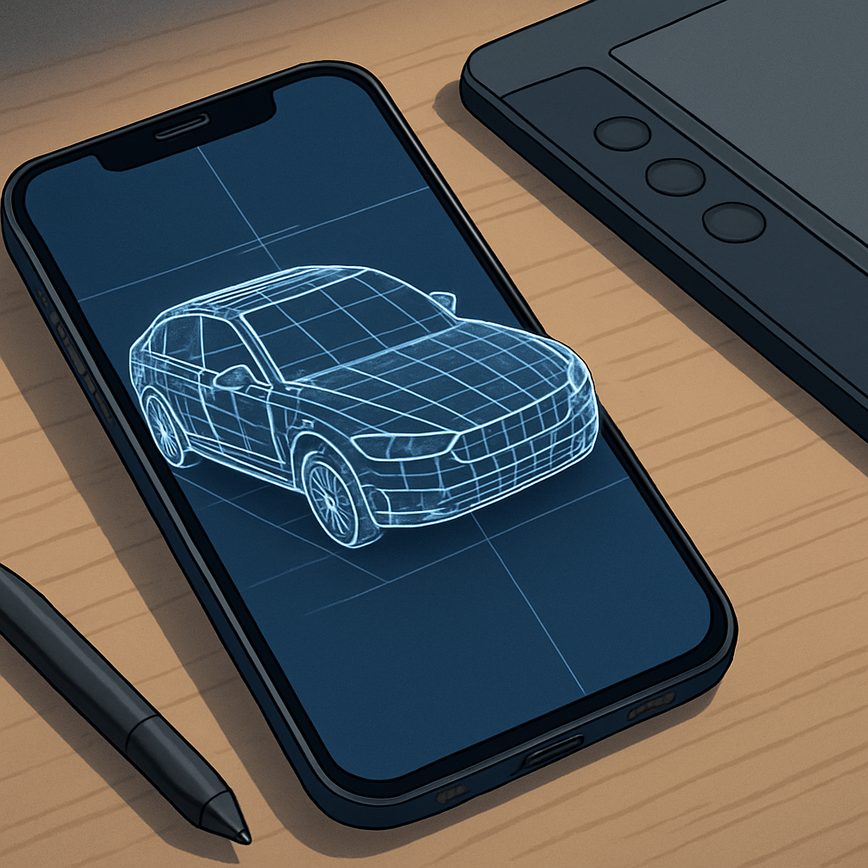
The role of a mobile GPU in 3D rendering involves breaking down complex models into simpler geometric shapes, then processing textures, lighting, and shading to create realistic visual effects. These tasks demand high computational power while balancing energy consumption, as mobile devices rely on limited battery capacity. Mobile GPUs employ advanced technologies such as dynamic voltage and frequency scaling to optimize power usage during graphics processing.
Moreover, mobile GPUs use specialized rendering techniques that reduce unnecessary workload without compromising visual quality. Techniques like tile-based rendering divide the screen into smaller sections, allowing the GPU to process these tiles more efficiently. This architecture helps in lowering memory bandwidth usage and reduces heat generation, preventing the device from overheating.
In essence, mobile GPUs play a crucial role in enabling rich 3D graphics on smartphones and tablets while managing power consumption effectively. Their ability to balance performance and battery life underlines their importance in modern mobile hardware, ensuring users can enjoy immersive graphics experiences without excessively draining their device’s battery.
Common 3D Graphics Applications on Smartphones
Smartphones today leverage 3D apps extensively, spanning various categories from entertainment to practical tools. One of the most prevalent uses of 3D graphics is in mobile games, where immersive environments and realistic character models enhance user engagement. Popular titles often push the boundaries of graphical fidelity to deliver console-level experiences directly on mobile devices. However, these games demand significant system resources, particularly impacting the GPU and battery life due to continuous rendering of complex 3D scenes.
Augmented reality (AR) applications are another prominent area utilizing 3D visualization. These apps overlay computer-generated 3D objects in the real world through the smartphone camera, creating interactive experiences for navigation, shopping, education, and entertainment. The processing of real-time 3D models in AR is resource-intensive, requiring both strong graphical processing and active sensor engagement, which can drain battery life quickly if not optimized efficiently.
3D visualization apps used for design, architecture, or medical imaging showcase the power of mobile 3D graphics in professional contexts. These apps allow users to manipulate and explore complex 3D models on the go. While less demanding than games or AR in terms of frame rates, they still engage the GPU and memory to maintain smooth and accurate rendering, impacting the overall performance and energy consumption of the device.
Overall, while 3D apps greatly enrich the user experience on smartphones through realistic graphics and interactivity, they do so at a cost to system resources. Optimizing these applications to balance quality and battery efficiency remains a core challenge for developers in the mobile ecosystem.
The Impact of 3D Graphics on Mobile Battery Life
Running 3D graphics on mobile devices has a significant impact on battery life, primarily due to the increased power consumption required to render complex visuals. Unlike static or 2D graphics, 3D graphics demand much more computational power, which directly affects mobile performance and energy usage. When a mobile device processes 3D graphics, its GPU (Graphics Processing Unit) works harder to render detailed textures, lighting, shadows, and animations in real time, which in turn drains the battery at a faster rate.
The power consumption of a mobile device running 3D graphics is influenced by several factors, including the graphical complexity, frame rate, screen resolution, and the efficiency of the GPU. Higher frame rates and resolutions require the GPU to process more data per second, which increases energy demands. Additionally, 3D applications that use advanced shading techniques or simulate physics can create an even greater load on the device, further reducing battery life.
Mobile performance also plays a pivotal role in battery consumption when running 3D graphics. Devices with older or less efficient hardware may struggle to render 3D scenes smoothly, causing the processor to work harder and consume more power. Conversely, newer devices equipped with optimized GPUs and energy-efficient components can manage power consumption better, extending battery life even during resource-intensive applications.
Another notable contributor to battery drain during 3D graphic processing is the screen itself. The display backlight, especially on high-brightness AMOLED or LCD screens, can use a substantial portion of the battery. When rendering vibrant, detailed 3D graphics, the screen tends to remain lit and bright for extended periods, compounding overall power consumption.
To mitigate the impact on battery life when using 3D graphics, developers and users can employ various strategies. These include optimizing graphical settings to reduce resolution or detail, limiting frame rates, and using power-saving modes that balance performance with energy efficiency. Ultimately, understanding how 3D graphics affect power consumption helps both developers and users make informed decisions to preserve battery life without compromising mobile performance.
Power Consumption Challenges with 3D Rendering
Continuous 3D rendering on mobile devices presents significant power consumption challenges that directly impact battery life. The energy use required to process complex graphics in real-time demands constant and intense activity from the GPU and CPU, resulting in elevated power draw. Unlike simpler applications or static images, 3D rendering requires sustained computational resources, which substantially increases power consumption and accelerates battery drain.
This high power usage is especially problematic for devices with limited battery capacity, as it shortens the overall longevity of a single charge and contributes to faster battery degradation over time. The constant workload placed on the device’s hardware results in increased heat generation, which can further strain battery efficiency and reduce its lifespan. Consequently, developers and hardware manufacturers face the challenge of optimizing 3D rendering processes to balance visual performance with energy efficiency.
Innovations like adaptive rendering techniques, dynamic resolution scaling, and efficient coding practices are essential to mitigate the energy use without compromising the quality of 3D graphics. However, even with such optimizations, intensive 3D rendering remains a major factor in power consumption challenges on mobile platforms, making battery drain a persistent concern for users engaging with graphically demanding applications and games.
Techniques for Improving Battery Life with 3D Graphics
Optimizing battery life while delivering high-quality 3D graphics on mobile devices is crucial for enhancing user experience. One of the primary methods of battery optimization involves leveraging power-saving techniques integrated directly into mobile GPUs. These include dynamic voltage and frequency scaling (DVFS), which adjusts the GPU’s power consumption based on workload demands, thereby reducing unnecessary energy use during less intensive graphical tasks.
Another technique is the efficient management of rendering workloads, such as frame rate regulation and adaptive resolution scaling. By dynamically lowering rendering resolution or frame rate during less demanding scenes, devices can significantly cut back on power consumption without compromising perceived visual quality. Additionally, employing hardware-accelerated APIs like Vulkan or Metal ensures more efficient communication between software and hardware, leading to improved mobile GPU efficiency and reduced battery drain.
Techniques like tile-based rendering are also pivotal—this approach processes small sections of a frame individually, minimizing energy spent on rendering off-screen pixels. Furthermore, energy-efficient shader programs and optimizing polygon counts help reduce computational load, further contributing to battery optimization. Finally, newer-generation GPUs come equipped with specialized power-saving modes designed explicitly for mobile applications running complex 3D graphics, enabling longer battery life without sacrificing performance.
Future Trends in 3D Graphics and Battery Technology
The future of mobile innovation lies at the intersection of advancements in 3D graphics and battery technology. As mobile devices continue to push the boundaries of visual performance, developers and engineers are focusing on enhancing 3D graphics rendering techniques to create more immersive and realistic experiences without drastically draining battery life.
One of the key future trends in 3D graphics is the integration of more efficient rendering algorithms such as ray tracing and real-time global illumination. These techniques promise to deliver high-quality visuals by simulating light behavior more accurately, but typically require significant processing power. To mitigate their impact on battery consumption, mobile devices will increasingly rely on specialized hardware accelerators and advances in chip design that optimize energy usage while maintaining graphical fidelity.
Meanwhile, battery technology is expected to evolve significantly with innovations like solid-state batteries, which offer higher energy density, faster charging times, and improved safety compared to traditional lithium-ion batteries. This leap in battery performance will enable devices to support intensive 3D graphics applications for longer periods, facilitating the growth of mobile gaming, augmented reality (AR), and virtual reality (VR) on handheld platforms.
Moreover, smarter power management systems powered by AI algorithms will play a crucial role in balancing performance and battery life. These systems can dynamically adjust the graphical processing load based on user behavior and context, ensuring that energy-draining features are optimized or throttled when not essential.
Additionally, the rise of cloud computing and edge rendering techniques will influence future trends by offloading heavy 3D rendering tasks to remote servers. This approach not only preserves the device’s battery life but also allows mobile devices to deliver high-end graphical experiences beyond their onboard hardware limitations.
In summary, the synergy between breakthroughs in 3D graphics and battery technology is poised to revolutionize mobile device performance. With continual progress in rendering methods, energy-efficient hardware, and next-generation batteries, users can expect richer visual content and longer usage times, driving forward the next era of mobile innovation.
Advancements in Mobile GPU Architectures
Recent advancements in GPU architectures have significantly shaped the landscape of mobile GPUs, aiming to strike a balance between enhanced graphics performance and improved energy efficiency. Modern mobile GPUs incorporate innovative design techniques such as dynamic voltage and frequency scaling (DVFS), which adjusts power consumption based on real-time performance demands, thereby optimizing battery life without compromising visual quality.
Additionally, architectures now leverage heterogeneous compute units that handle different types of workloads more efficiently. This diversification allows certain tasks to be offloaded to less power-hungry cores while reserving high-performance cores for demanding graphical computations. The result is a more intelligent distribution of processing power that maximizes performance improvements while minimizing energy use.
Manufacturers have also embraced improved energy-efficient memory technologies and enhanced shader designs that reduce computational overhead. These innovations help reduce the overall power consumption of mobile GPUs, addressing one of the most critical limitations of mobile devices—their battery life. Consequently, users experience smoother graphics rendering in gaming, augmented reality, and multimedia applications without rapid battery drain.
Overall, the continuous evolution in GPU architectures demonstrates a clear industry focus on coupling substantial performance improvements with sustainable energy efficiency. This balance ensures mobile GPUs meet the ever-growing demands of high-quality 3D graphics while preserving the precious battery resource essential for mobile device usability.
Innovations in Battery Technologies for Mobile Devices
With the increasing demand for advanced 3D graphics on mobile devices, battery innovation has become crucial to meet the growing energy needs. Traditional mobile batteries often struggle with heavy 3D graphic usage, leading to rapid depletion and reduced battery life. To address this, significant advancements in energy storage technologies are being explored and developed.
One of the most promising innovations is the development of solid-state batteries, which replace the liquid electrolyte with a solid one. This advancement significantly improves energy density and safety, allowing for longer battery life under intense usage scenarios like 3D gaming and augmented reality applications. Moreover, solid-state batteries provide faster charging times and greater stability, directly benefiting mobile users who rely heavily on graphic-intensive apps.
Another emerging technology is the integration of silicon anodes in lithium-ion batteries, which enhances energy storage capacity and prolongs battery endurance. Silicon anodes expand the battery’s ability to store more energy while maintaining a compact form factor, perfectly suited for mobile batteries where space is limited but power demands are high.
Additionally, researchers are exploring flexible and thin-film batteries that can be incorporated into various device designs without compromising performance. These batteries offer improved thermal management and durability, key factors that contribute to sustaining longer battery life during prolonged 3D graphic rendering tasks.
In conclusion, ongoing innovations in battery technology, from solid-state to silicon-enhanced and flexible batteries, are pivotal in extending the running time of mobile devices. These advancements ensure users can enjoy rich, immersive 3D graphic experiences without constantly worrying about quick battery drain.
Understanding 3D Graphics in Mobile Devices
3D graphics technology in mobile devices has become increasingly sophisticated, enabling rich visual experiences in gaming, augmented reality, and user interfaces. At the core of rendering these intricate visuals is the mobile GPU (Graphics Processing Unit), a specialized processor designed to handle complex graphical computations efficiently within the power constraints of mobile hardware.
Unlike traditional 2D graphics, 3D graphics simulate three-dimensional environments by calculating the position, depth, and lighting of objects in virtual space. This involves several steps including modeling, where the shape of objects is created; shading, which determines the color and texture; and rasterization, the process of converting 3D models into a 2D image for display. All of these tasks demand substantial processing power, which the mobile GPU is optimized to deliver.
The mobile GPU operates by breaking down the graphics rendering into smaller tasks that can be processed in parallel. It handles vertex processing, where each point in a 3D model is transformed and decorated with color and texture information. Fragment processing then calculates the final pixel colors, applying effects such as lighting and shadowing to enhance realism. By distributing these tasks across multiple cores, the mobile GPU ensures smooth and fast rendering of 3D graphics even on limited battery capacity.
Modern graphics technology in mobile devices also leverages APIs like OpenGL ES and Vulkan, which provide developers with tools to efficiently utilize the mobile GPU hardware. These APIs allow for better control over rendering pipelines and resource management, enabling sophisticated 3D scenes while balancing performance and power consumption.
As 3D graphics become more prevalent in mobile applications, understanding the capabilities and operation of mobile GPUs is crucial. The balance between delivering high-quality visuals and managing battery life hinges on how effectively the graphics technology is implemented and optimized within mobile devices.
How Mobile GPUs Handle 3D Graphics
Mobile GPUs (graphics processing units) are specialized hardware components designed to handle the complex calculations required for 3D rendering on mobile devices. Unlike CPUs, which are optimized for general-purpose computing tasks, mobile GPUs excel at graphics processing by efficiently managing parallel operations required to render detailed 3D scenes. This makes them critical for delivering smooth graphics performance in mobile hardware.

I’ve been exploring casino games and betting strategies since I first tried a slot machine in a local arcade. I love breaking down game mechanics, hunting for the best bonuses, and sharing responsible gaming tips with our community.
