
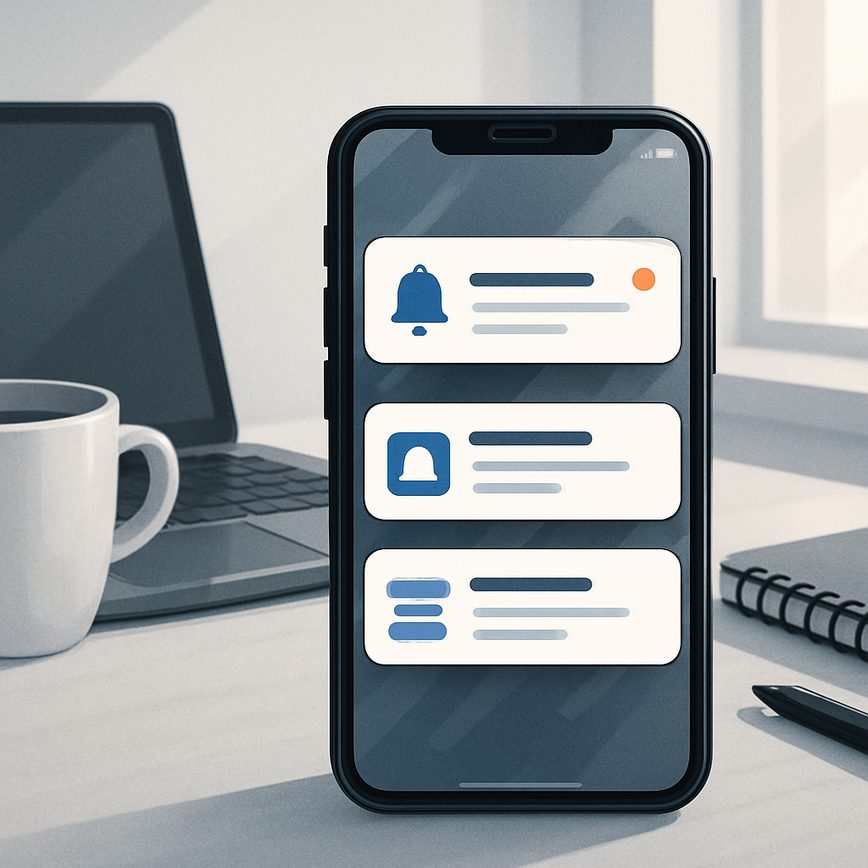
Understanding Push Notifications
Push notifications are messages sent directly to users’ devices to provide timely updates, reminders, or promotional content. These mobile alerts and notifications can appear on both web and mobile apps, serving as a direct communication channel between an app or website and its users. Unlike emails or text messages, push notifications are designed to be quick and engaging, capturing attention immediately without requiring the user to be actively using the app at the time.
There are several types of push notifications, each with a distinct purpose in user engagement. Informational notifications deliver essential updates such as news, weather alerts, or order confirmations. Promotional notifications encourage users to take advantage of special offers, discounts, or new features. Behavioral notifications are triggered based on user actions, such as reminders to complete a purchase or alerts when a favorite item is back in stock. Additionally, transactional notifications keep users informed about account activity, like password changes or subscription renewals.
In mobile apps, push notifications function by utilizing the app’s connection to operating system services. When a server sends a notification, the OS handles delivering it to the user’s device, even if the app is not actively open. This ensures timely engagement, prompting users to interact with the app more frequently and enhancing overall user retention. Notifications can be customized with rich media, action buttons, and deep links to improve effectiveness.
On web apps, push notifications rely on browser support and user permissions. When a user allows notifications, the website can send alerts via a push service, which are then displayed by the browser even when the user is not actively browsing the site. These notifications can drive repeat visits and re-engagement by reminding users of important updates or personalized content based on their behavior and preferences.
Overall, push notifications are a powerful tool to boost user engagement by delivering relevant and timely mobile alerts directly to users. Understanding the different notification types and how they operate across platforms is essential for developing effective communication strategies that enhance session frequency and encourage ongoing interaction.
Types of Push Notifications
Push notifications can be categorized into several types, each serving a unique purpose to engage users. One primary category is transactional notifications, which include alerts about account activity, purchase confirmations, or delivery updates. These notifications provide essential information that users often expect in real-time.
Another common type is promotional alerts, designed to capture user interest with offers, discounts, or new product launches. These alerts aim to boost user interaction and drive sales by delivering timely marketing messages.
Reminders serve to keep users engaged by prompting them about upcoming events, deadlines, or actions they need to take. For example, a fitness app might send workout reminders, while a calendar app could notify users about scheduled meetings.
Lastly, custom notifications are tailored messages based on user behavior or preferences. Apps often use these to create personalized experiences, such as recommending content or alerting users about relevant updates specific to their usage patterns.
By leveraging these diverse types of push notifications, apps can maintain user interest and encourage frequent sessions, ultimately enhancing overall engagement.
Role in User Engagement
Push notifications have become an essential component of modern engagement strategies, significantly boosting user interaction and retention. By providing timely real-time communication, push notifications keep users informed and involved, creating a continuous connection between the user and the app or website. This constant engagement encourages users to return more frequently, enhancing overall session frequency.
One of the key advantages of push notifications is their ability to deliver personalized messages based on user behavior and preferences. This tailored communication resonates more effectively with the audience, driving higher interaction rates. When users receive relevant and timely updates, they are more likely to engage with the content, which directly impacts user retention positively.
Moreover, push notifications enable businesses to implement proactive engagement strategies that can re-activate inactive users. By reminding users of new features, exclusive offers, or content updates, push notifications create opportunities for meaningful user interaction and sustained interest. This ongoing dialogue nurtures a loyal user base and reduces churn.
Effective use of push notifications fosters a dynamic user experience that blends convenience with immediate access to pertinent information. As a result, push notifications are indispensable in any comprehensive approach to improving user retention and maximizing the impact of engagement strategies.
Impact of Push Notifications on Session Frequency
Push notifications play a crucial role in influencing session frequency, significantly shaping user sessions and app usage patterns. By delivering timely and relevant alerts, these notifications encourage users to re-engage with an app, thereby increasing the number of user sessions. This direct interaction acts as a gentle nudge that can bring users back to an app, even when they might not have otherwise opened it voluntarily.
The notification impact on session frequency is measurable, with well-targeted push messages often leading to a notable uplift in daily and weekly user sessions. When users receive reminders, updates, or promotional content, they are more likely to open the app multiple times within a given timeframe, thus enhancing overall app usage. This increase in session frequency is vital for app retention strategies, as frequent user sessions typically correlate with higher user satisfaction and prolonged app loyalty.
Moreover, the type and timing of push notifications have a direct effect on the notification impact. Personalization based on user behavior, preferences, and engagement history ensures that the messages are seen as helpful rather than intrusive. For example, notifications about new content, exclusive offers, or important updates can elevate user interest and prompt more frequent sessions, whereas irrelevant messages might have the opposite effect, potentially causing users to disable notifications or uninstall the app altogether.
Understanding app usage patterns enables developers to optimize the frequency and content of push notifications. This optimization leads to a balanced approach where users receive enough engagement without feeling overwhelmed. When the balance is achieved, session frequency improves sustainably over time, creating a habitual usage pattern that benefits both users and app owners.
In summary, push notifications are a vital tool in enhancing session frequency by increasing user sessions and positively influencing app usage. The notification impact depends heavily on relevance, timing, and personalization, all of which contribute to driving app engagement and retention. As a result, effectively implemented push notifications not only boost active user sessions but also foster a long-term relationship between the user and the app.
Increase in User Session Frequency
Push notifications play a pivotal role in driving session increase by re-engaging users and nudging them to return to an app more frequently. Studies have consistently shown that timely and relevant push notifications can boost notification response rates significantly, which directly correlates with an uptick in session frequency. According to a report by Localytics, users who receive push notifications open an app 3-10 times more frequently than those who do not. This means a substantial increase in active users and, consequently, higher app engagement metrics.
The ability of push notifications to remind users of personalized content, updates, or offers triggers users to interact more often, thus elevating session counts. Research published by Braze highlighted that segmented and targeted push notifications led to a 54% increase in app sessions. This dynamic form of communication ensures users remain engaged without feeling overwhelmed, fostering habitual app usage.
Moreover, apps that utilize push notifications strategically outperform those that don’t by maintaining user interest over longer periods. Enhanced active user metrics stem from the real-time engagement push notifications foster, where users engage proactively, responding to offers, content alerts, or reminders. This sustained interaction is critical for brands measuring success through app engagement metrics, reinforcing the value of a focused push notification strategy in driving session frequency growth.
Factors Affecting Notification Effectiveness
The effectiveness of push notifications largely depends on several key factors including timing, personalization, and relevance. Timing plays a crucial role; sending notifications at the right moment increases the likelihood that users will engage rather than dismiss the message. Understanding user habits and peak activity periods can help determine the optimal timing to send notifications.
Personalization is another vital element in boosting notification effectiveness. Tailoring messages based on user preferences, past interactions, and behaviors creates a more meaningful connection. Notifications that feel customized to the recipient’s interests tend to generate higher engagement and foster a stronger relationship between the user and the app or website.
Notification relevance ties closely with personalization; it ensures that the content delivered is meaningful and valuable to the user. Irrelevant or generic notifications may annoy users and lead to unsubscriptions or disabling notifications altogether. Therefore, understanding user preferences and delivering content tailored to their needs greatly enhances notification success.
In summary, optimizing push notifications requires a balanced approach focusing on precise timing, deep personalization, and delivering relevant content aligned with user preferences. Mastering these factors enables businesses to increase session frequency and build lasting engagement with their audience.
Best Practices for Using Push Notifications to Boost Sessions
To optimize push notification campaigns effectively, it is crucial to implement notification strategies that enhance user engagement without causing frustration. Striking the right balance begins with understanding your audience’s preferences and behaviors. Segmenting users based on activity levels, interests, and past interaction with notifications allows for personalized content that resonates better and encourages return sessions.
Engagement tips such as timely and relevant messaging can significantly improve session frequency. Avoid sending notifications during inconvenient hours; instead, schedule messages when users are most likely to be receptive. Utilize data-driven insights to determine peak interaction times and tailor push notification campaigns accordingly. This approach not only increases the chances of driving users back into your app or website but also maintains a positive user experience.
Push notification optimization also involves keeping your messages concise, clear, and action-oriented. Use compelling call-to-actions that provide value and prompt users to engage without feeling pressured. Overloading users with too many notifications could lead to annoyance and potentially increase opt-out rates. Instead, focus on quality over quantity by prioritizing messages relevant to the user’s journey.
Improving user experience through push notifications includes giving users control over their notification preferences. Allow options to customize frequency, types of messages received, and topics of interest. Empowered users are less likely to disable notifications entirely, leading to sustained engagement and increased session frequency over time.
Additionally, continuously analyze the performance of your push notification campaigns. Track metrics like open rates, click-through rates, and subsequent user sessions to refine your notification strategies. Testing different message formats, send times, and content can reveal what works best for your audience, allowing ongoing push notification optimization that supports user retention and boosts session frequency.
Personalization and Segmentation
Personalized notifications are a powerful tool to enhance user engagement by tailoring messages to individual preferences and behaviors. When notifications reflect the unique interests of users, they are more likely to capture attention and prompt action. This customized approach fosters a more meaningful connection between the user and the app or website, thereby increasing session frequency.
User segmentation plays a critical role in this process, dividing audiences into distinct groups based on demographics, behaviors, or interests. Through effective segmentation, marketers can deliver targeted messaging that resonates with each audience segment. This precision ensures that users receive relevant content rather than generic notifications, reducing the risk of annoyance and opt-outs.
By combining personalized notifications with user segmentation, businesses can influence consumer behavior positively. Tailored content drives higher engagement rates as users feel understood and valued, encouraging repeated visits and longer sessions. This strategic approach not only boosts session frequency but also contributes to improved retention and overall user satisfaction.
Ultimately, integrating personalized notifications and user segmentation within push notification strategies allows for a more targeted, user-centric experience. This leads to more effective communication, increased session frequency, and a stronger relationship with consumers.
Optimal Timing and Frequency
Choosing the right notification timing is crucial to maximizing user engagement and encouraging more frequent sessions. Analyzing user behavior data helps identify peak engagement periods when users are most likely to open and interact with push notifications. Sending notifications during these optimal windows ensures higher visibility and response rates.
Equally important is managing sending frequency to avoid notification fatigue, which can lead to users disabling notifications or uninstalling the app altogether. It is advisable to limit the number of notifications sent daily or weekly based on user preferences and interaction patterns. Adaptive frequency models that adjust according to user responsiveness can keep users engaged without overwhelming them.
Testing different notification timing and sending frequency strategies is key to discovering what works best for your audience. Segmenting users by their engagement timing and customizing notification schedules allows for more personalized communication. This approach respects individual user habits and maximizes session impact by delivering messages when they are most likely to be acted upon.
In summary, balancing notification timing and sending frequency by leveraging user engagement timing insights ensures push notifications drive meaningful interactions without causing fatigue, leading to sustained session growth and enhanced user experience.

I’ve been exploring casino games and betting strategies since I first tried a slot machine in a local arcade. I love breaking down game mechanics, hunting for the best bonuses, and sharing responsible gaming tips with our community.
