
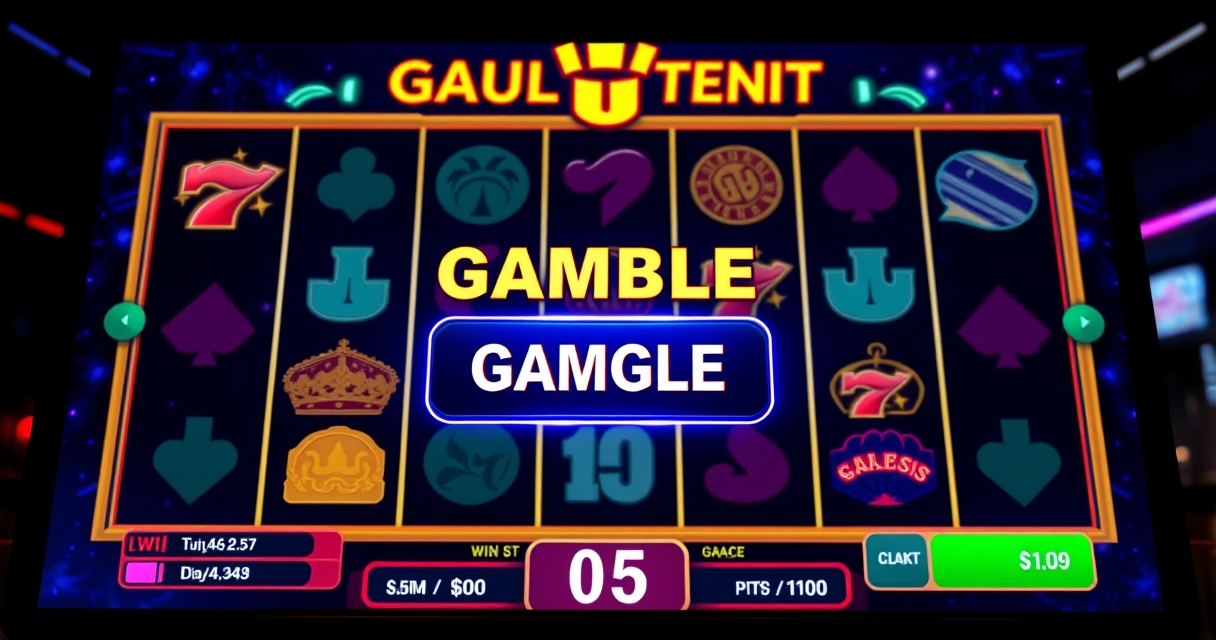
Slot machines and casino games often include optional gamble features that let players risk recent winnings for a chance to multiply them. The most common version is the “double-up” gamble, found in classic video poker, many video slots, and some table games. At first glance, the feature looks harmless, a single button press that can turn a 50-credit win into 100 credits. Yet beneath the surface, these mini-games follow a mathematical script that systematically drains bankrolls over time. Understanding how the double-up mechanic works, what probabilities it hides, and how it interacts with session volatility can help players make informed decisions instead of chasing losses on autopilot.
What the Double-Up Gamble Actually Is
The double-up gamble is a post-win mini-game that appears after a qualifying payout. In video poker, it usually triggers after any win of at least one coin. In slots, it often requires a win that exceeds a set threshold, such as 10x the line bet. The player is shown a simple choice: collect the current win or risk it to double the amount. The game then presents a random event, typically a card draw, a color guess, or a wheel spin, with a 50% chance of success. If the player wins, the prize doubles; if they lose, the entire win disappears. Some variants allow repeated gambles on the same win, letting players pyramid their risk up to a maximum multiplier, often 4x or 8x the original amount.
Developers design these features to feel like a separate game, complete with celebratory animations and sound effects. The interface rarely displays the exact odds or the expected value, so players rely on intuition rather than math. The result is a psychological trap: the feature turns a guaranteed win into a binary gamble, shifting the focus from steady accumulation to high-risk, high-reward moments. Over a session, these small gambles compound into significant bankroll swings that most players underestimate.
The Hidden Math Behind the 50% Success Rate
The double-up gamble is marketed as a fair coin flip, but the math tells a different story. A single gamble has a 50% chance of doubling the win and a 50% chance of losing it. The expected value of one gamble is therefore zero: half the time you gain the win amount, half the time you lose it, so the average outcome is break-even. However, the feature is rarely used just once. Players who win the first gamble often press their luck again, turning a single 50% event into a series of independent trials. The probability of successfully doubling a win four times in a row is 6.25%, meaning the player loses the entire win 93.75% of the time when chasing the maximum multiplier.
Casinos also adjust the feature’s availability based on win size. Small wins trigger the gamble more often, while large wins may lock it behind a higher threshold or disable it entirely. This design ensures that players with modest bankrolls face the gamble more frequently, increasing the likelihood of repeated risk-taking. The cumulative effect is a slow erosion of session profits, even when the individual gambles appear balanced. Players who treat the feature as a harmless bonus are unknowingly playing a negative-expectation game that favors the house over time.
Bankroll Volatility and the Double-Up Effect
Bankroll volatility measures how much a player’s balance fluctuates during a session. The double-up gamble injects extreme volatility by turning small, frequent wins into large, infrequent payouts. A player who wins 20 credits on a slot spin might risk it all for 40 credits, then risk that for 80, and so on. The outcome is binary: either the player walks away with a much larger win or loses everything in a single click. This creates a rollercoaster effect where the bankroll swings wildly between peaks and valleys, making it difficult to maintain a steady session rhythm.

High volatility is not inherently bad, some players enjoy the thrill of chasing big multipliers, but it requires a larger bankroll to absorb the losses. A player with a 100-credit bankroll who uses the double-up feature on every win will deplete their funds faster than a player who collects wins immediately. The feature also disrupts the natural variance of the base game, replacing predictable payouts with unpredictable gambles. Over time, the double-up effect can turn a profitable session into a losing one, even if the base game has a positive return to player percentage.
Psychological Triggers That Encourage Repeated Gambling
The double-up gamble is designed to exploit cognitive biases that make players overestimate their chances of success. The near-miss effect is one of the most powerful triggers: when a player loses a gamble by a narrow margin, such as guessing the wrong card by one rank, the brain interprets the outcome as “almost winning.” This creates a false sense of control, making the player believe that skill or intuition can influence the next gamble. Casinos reinforce this illusion with animations that highlight near-misses, such as a card flipping just past the correct one or a wheel slowing to a stop near the winning segment.
Another trigger is the sunk-cost fallacy. After winning the first gamble, players feel compelled to continue because they’ve already “invested” the win into the feature. The fear of missing out on a larger payout overrides rational decision-making, leading to repeated gambles even when the odds are stacked against them. The feature also capitalizes on the illusion of a hot streak: players who win one gamble often believe they’re on a roll, ignoring the fact that each gamble is an independent event with the same 50% success rate. These psychological traps make the double-up feature far more dangerous than its simple mechanics suggest.
How Casinos Use the Feature to Extend Playtime
Casinos include the double-up gamble to increase player engagement and extend session duration. The feature creates a secondary layer of excitement that keeps players interacting with the game even after a win. Instead of cashing out, players are tempted to risk their winnings for a chance at a bigger prize, prolonging their time at the machine. This is particularly effective in online casinos, where the gamble feature is just a single click away, removing the friction of walking to a cashier or switching games.
The feature also serves as a psychological reset. After a losing streak, a small win followed by a successful gamble can make the player feel like they’ve recovered their losses, even if the net result is still negative. This false sense of recovery encourages players to continue betting, often at higher stakes. Casinos also use the double-up feature to smooth out payouts: by letting players gamble away small wins, the casino reduces the frequency of large payouts while keeping the player engaged. The result is longer sessions with more bets placed, increasing the casino’s revenue over time.
Responsible Play Strategies for Managing the Double-Up Risk
Players who want to enjoy the double-up feature without risking their bankroll can adopt a few simple strategies. The first rule is to set a strict limit on the number of gambles per win. Deciding in advance to gamble only once, or not at all, removes the temptation to chase losses in the heat of the moment. Another approach is to use the feature only on wins that exceed a certain threshold, such as 5x the bet amount. This ensures that the gamble is used sparingly and only on winnings that won’t cripple the bankroll if lost.
Bankroll management is critical when using the double-up feature. Players should allocate a separate portion of their funds for gambling, treating it as an entertainment expense rather than a way to grow their bankroll. Setting a loss limit for the session, such as stopping after losing three gambles in a row, can prevent the feature from spiraling out of control. Some online casinos also offer tools to disable the gamble feature entirely, which can be a useful safeguard for players prone to impulsive decisions. By treating the double-up gamble as a high-risk bonus rather than a reliable way to increase winnings, players can enjoy the thrill without jeopardizing their long-term bankroll.
Alternatives to the Double-Up Gamble in Modern Slots
As players become more aware of the risks associated with the double-up gamble, game developers have introduced alternative features that offer similar excitement without the same level of risk. One popular replacement is the “hold and spin” mechanic, found in games like Lightning Link and Buffalo Grand. Instead of gambling winnings, players collect symbols that trigger a bonus round with guaranteed payouts. The volatility is still present, but the outcome is determined by the game’s RNG rather than a separate gamble, making it easier to predict the expected value.
Another alternative is the “win multiplier” feature, which applies a random multiplier to wins during free spins or bonus rounds. Unlike the double-up gamble, these multipliers are awarded automatically and cannot be lost, providing a safer way to boost payouts. Some games also include “cash collect” features, where players can choose to bank a portion of their winnings or risk it for a higher payout, but with better odds than a 50% gamble. These alternatives give players the thrill of risk and reward without the same mathematical disadvantage, making them a smarter choice for bankroll-conscious players.

I’ve been exploring casino games and betting strategies since I first tried a slot machine in a local arcade. I love breaking down game mechanics, hunting for the best bonuses, and sharing responsible gaming tips with our community.
